By Ghailan IRGH (ANONLG.com)
If you look closely at how absolute power works, the best kind of control doesn’t come from building massive stone walls, locking up dissidents, or tracking people with advanced radar. Real control is built inside the mind, by using manufactured fear. If a government wants to keep an uncritical populace in line, it doesn’t need an armed soldier standing on every single street corner. It just needs to convince everyone that there is an invisible, terrifying threat hiding somewhere completely out of reach.
Back in March 2004 (more than 20 years ago!), my published Indonesian book “Salah Paham tentang Setan, Jin, Roh, Hantu, dan Sihir” mapped out the exact psychological blueprint of this trick. The book broke down how sensory illusions, weird natural shifts in electromagnetic fields, and state-backed mysticism have been weaponized throughout history to steer how large groups of people behave.
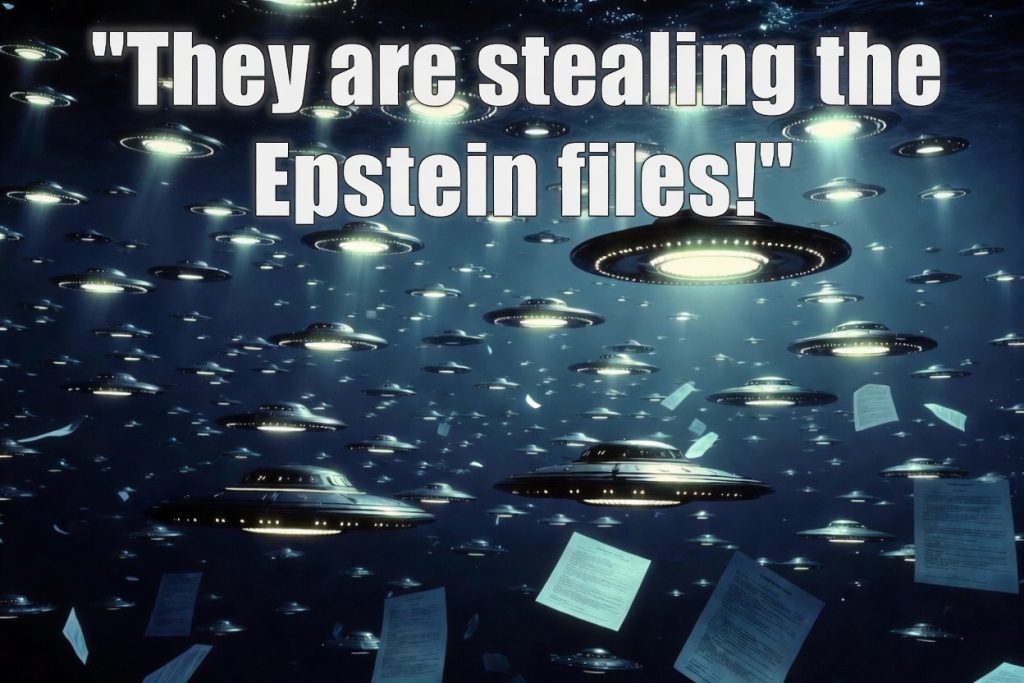
Fast forward to the geopolitics of the 2020s. Suddenly, the United States government is obsessed with “Transmedium UAPs” and mysterious anomalies lurking in the deep ocean. This isn’t a sudden breakthrough in cosmic discovery. It is a brilliant, modernized reflection of an ancient maritime power play.
The Ken Arok Horror: Why the Elite Fear the Streets
To understand why a state feels the need to invent a ghost in the deep sea, you have to look at the massive physical vulnerability of a human ruler.
Back in 1222, an ordinary guy from East Java—a known bandit, commoner, and laborer named Ken Arok (1182–1227)—completely ruined the illusion that kings were holy, untouchable beings. Armed with nothing but a cursed dagger (keris) and cold, calculated ambition, he assassinated Tunggul Ametung, the ruler of Tumapel. Ken Arok didn’t just take the throne to rule as Sri Rajasa Bhatara Sang Amurwabhumi; he also claimed the ex-king’s extraordinarily beautiful wife, Ken Dedes. In the context of 13th-century Javanese realism, this was a raw, bare-chested society. Power was highly visual, immediate, and completely unvarnished by institutional camouflage.
Ken Arok’s successful coup sent a terrifying message to the Javanese aristocracy: if a commoner can make a king bleed, then any peasant can disrupt a dynasty. For the royal families that followed, this piece of history was the ultimate nightmare. It was a glaring vulnerability they could never allow to happen again.
Nyi Roro Kidul: Inverting the Threat into the Ocean (1586)
When Panembahan Senopati founded the Islamic Mataram Kingdom in 1586, the royal house knew that standard walls and standing armies weren’t enough to stop the next Ken Arok. They needed something smarter, so they turned to political mysticism. The state came up with a brilliant psychological rule: the masses fear nothing more than what they cannot see.
This was the birth of the heavily pushed Nyi Roro Kidul narrative. The state machine started drilling a specific doctrine into the public mind: the reigning Sultan of Yogyakarta and Mataram wasn’t just a political ruler; he was spiritually married to the terrifying, supernatural Queen of the Southern Ocean.
Suddenly, the violent, wild currents of the Indian Ocean became the state’s ultimate enforcer. The legendary Indonesian author Pramoedya Ananta Toer, along with early Dutch historical observers, noted how Western administrators were completely baffled by how easily Javanese kings maintained absolute control over massive lands. They didn’t need a giant, expensive standing army or an aggressive police state in every village.
The fear was entirely self-enforced. A public rebellion became a spiritual impossibility. Trying to overthrow the King was no longer about fighting a mortal man; it meant declaring war on a supernatural deity ruling the deep sea. To cement this social divide, stories like Petruk Dadi Ratu (Petruk Becomes King) were deliberately woven into traditional Wayang Kulit (shadow pompous puppetry). The message to the common folk was blunt and mocking: You’re just a peasant. You don’t have the royal spiritual bloodline. Don’t even think about holding the crown.
The 2020s Pentagon Complex: High-Tech Deep-Sea Capital Extraction
Four hundred years later, the stage has shifted to Washington D.C., and the modern military-industrial complex is running the exact same structural playbook. In the 2020s, the U.S. defense establishment ran into a massive institutional crisis: consecutive failed financial audits under the Chief Financial Officers (CFO) Act of 1990. When the Pentagon failed its comprehensive audits, it was revealed that the department could not fully account for roughly 60% of its trilllion-dollar asset portfolio. Faced with mounting statutory pressure to explain where these public funds vanished, the national security apparatus executed a calculated geographical pivot. They shifted the “UFO Circus” out of the visible sky and plunged it into the deep ocean under the labels “Unidentified Submerged Objects” (USOs) and “Transmedium Anomalies.”
This is the “Plankton Complex” playing out on an industrial scale. Think about the cartoon character Plankton from SpongeBob: he builds crazy, hyper-advanced laboratory lasers and high-tech artificial intelligence just to pull off the incredibly mundane task of stealing a simple burger recipe. The Pentagon operates on the same logic. They deploy highly complex, classified language about interstellar physics, exotic materials, and deep-sea national security threats. But when you strip away the sci-fi theater, the functional utility remains basic: it creates a perfect national security shield over an unresolved financial accounting black hole.
By convincing modern citizens—who are treated exactly like the easily distracted residents of Bikini Bottom—that there is an advanced, unidentifiable threat hiding in the dark ocean trenches, the Pentagon builds an instant wall against democratic oversight. Under 10 U.S. Code § 119 (which legally isolates Special Access Programs) and strict classification laws, any genuine attempt by civilian auditors to track the money is instantly shut down in the name of classified, existential defense.
Conclusion: The Cynical Economic Twist
The core mechanism remains a structural mirror. Whether it’s the Javanese Mataram Kingdom in 1586 or modern Washington D.C. in the 2020s, both systems weaponized the mysteries of the deep sea to control public perception. However, the economic flow has been completely turned on its head:
The Ancient Javanese Kings used ocean mysticism as a capital-preservation strategy. By inventing an invisible queen in the sea, they achieved absolute public obedience for free, saving the royal treasury from spending wealth on a massive mercenary army.
The Modern Military-Industrial Complex does the opposite. They use the high-tech mysticism of “transmedium anomalies” for capital extraction. They manufacture a deep-sea ghost to ensure that an un-itemized, multi-billion-dollar funding pipeline keeps rolling in from the public forever.
The story doesn’t need to be tidy; it just needs to remain classified and expensive. The second the threat is explained or resolved, the statutory camouflage falls apart, and the un-auditable capital ceases to flow. The ghost has to stay in the water, because an invisible threat is the only kind of threat you can never defund.